Table Of Content

Thus, effectively, you will be digging lines of holes parallel to the perimeter length, which are spaced 2 ft. apart from each other. Note that for larger foundations, the spacing between the joist supporting piers can be up to four feet, so you need to dig holes accordingly. Then, as seen in the 3rd part of the image, back-fill the remaining part of the hole with some of the mud that came out during the initial digging process. Once the hole is filled up to the surface, tamp it down to create a level surface.
Should you insulate under a pier and beam house?
This can be checked using the plumb bob, the use of which too is described in the ‘Measurements’ section. If you intend to build a square structure, then do this for any two parallel and opposite sides, leaving the remaining two as they are. When the curing of the concrete foundation is completed, the process of laying the beam on it is started. But it also depends on the experience and branding of the repairing company. This foundation helps the houses from entering animals directly into it and also protects the room of houses from rainwater. As with any construction task, prioritize safety by wearing appropriate protective gear and following safety guidelines or instructions provided by the insulation manufacturer.
How To Build a Pier and Beam Foundation
Now that the perimeter piers are done, you can work on the interior piers along the center of the floor plan. Follow the same procedures as before and stack the concrete blocks until they are level with the exterior blocks. Place them on their sides into the holes you dug, one on top of the other until they are at least 24 inches aboveground.
New LA Property Regulations (SB-
Sometimes called a post and beam foundation, pier and beam foundations are built by placing wooden beams across a grid of concrete piers to elevate homes above the ground. Wooden cross beams, called joists, are placed horizontally across the main support beams creating the base structure of the building. Pier and beam foundations are especially beneficial in areas with expansive soils, which can expand and shrink due to changes in moisture content. This can cause slab foundations to crack and shift, resulting in costly repairs. With a pier and beam foundation, the piers are placed deep into the ground, beneath the active soil, providing a stable base for the house.
Pier and Beam vs. Other Foundations
Earthquake safety should be a top priority, especially when you live in close proximity to an active fault-line. Now, (a) holds one end of the tape at the 4-meter marking, and a third person (c) extends and holds it on the 3-meter marking, thus measuring the distance between those two points. If the measurement taken by (c) is less than or more than 5 meters, then (b), while facing the 2nd post, will move to his left or right, till exactly 5 meters is obtained. After that, (b) will drop the plumb where he/she stands, and fix a pole on that spot to tie the string over. Another important thing is to make sure is that all the piers are exactly vertical.
Pier and Beam vs. Wood
In the following sections, we will take you through the steps for constructing a simple DIY pier and beam foundation. If repairs are needed for a pier and beam foundation, options may include landscaping and drainage improvements, installation of retaining walls, or replacement of piers or beams. It is advisable to consult professionals experienced in pier and beam installation and repairs for proper evaluation and assistance. Repairing a pier and beam foundation may involve various measures depending on the specific issues identified. This can include landscaping and drainage improvements to address water-related problems, installation of retaining walls to stabilize the foundation, or even replacement of damaged piers or beams. Once the area is prepared, footings are created using gravel and concrete.
Los Angeles Balcony Inspections and Repairs
This includes wearing appropriate safety gear, using the right tools, and consulting professionals when needed. With the foundation completed, you can now proceed with the rest of the construction project, knowing that you have a solid and secure base to support your structure. With the beams constructed and secured in place, we are now ready to move on to the next step – installing the piers. With the concrete footings poured and cured, we can now move on to the next step – constructing the beams. Our Texas team here at Perma Pier is built up of experts, highly knowledgeable on all of the ins and outs of pier and beam foundations and beyond. We can help you maintain and repair any aspect of your foundation so it lasts as long as you own your home.
How to build a pier and beam foundation?
Unfortunately, the crawl spaces created by pier and beam foundations are havens for termites, insects, rodents, and other creatures that like to infest your home. But this should not stop you from considering a pier and beam foundation for your house, especially when there are so many professional pest control companies and DIY solutions to pest problems. While most homeowners don’t buy or build houses with the intention of moving the structure elsewhere, pier and beam foundations leave open the opportunity for you to move your house. Indeed, by elevating the house off the ground, this type of foundation gives you easy access to the underside of your house. Fix the 2″ × 6″ wooden pieces, or those of your chosen length, onto the concrete piers along the boundary.
Old front porch is transformed into home office - Star Tribune
Old front porch is transformed into home office.
Posted: Fri, 06 Feb 2015 08:00:00 GMT [source]
Starting with site preparation, ensuring proper measurements, and digging the foundation holes, each step plays a vital role in creating a solid foundation. Pouring the concrete footings, constructing the beams, and installing the piers ensure the structural integrity of your foundation. Laying the floor joists, adding subflooring, and insulating the crawl space contribute to the stability, comfort, and energy efficiency of your structure. Pier and beam foundations are commonly referred to as post and beam foundations. This type of foundation is commonly used in older homes.This type of foundation is more expensive than slab foundations in modern construction.
Use a plumb bob, string line, and-or level to make sure the center of the pier is in place. Pier and beam foundations typically were, and still are, used to raise the building above uneven ground to form a level base. They’re also used where the soil is structurally unsound, or the ground is seasonally exposed to moisture or potential flooding.
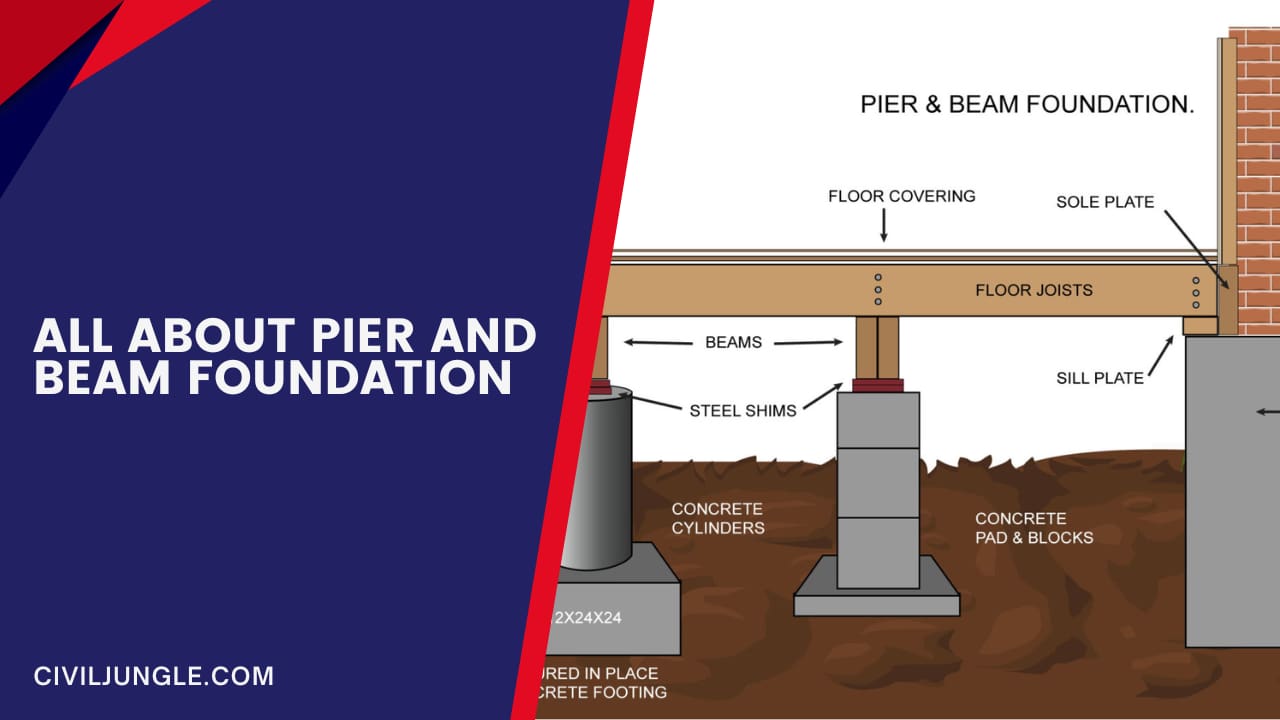
Holes are dug or drilled for concrete piers at strategic points around the perimeter and throughout the center of the building’s footprint. The piers support a beam grid which in turn supports the joists and subfloor, and the rest of the structure. In some cases, the piers or beams that support your foundation may need to be replaced. Pier and beam foundations are not immune to the same types of issues as slab foundations, but proper installation and maintenance can help extend their life. A pier and beam foundation design starts after thoroughly examining the site’s terrain, soil-bearing capacity, and climatic concerns.
"Structural Engineer" with over 5 years of experience in estimation, structural design, and surveying.I am passionate about using my skills to create safe and sustainable structures. I am also a keen writer, and I enjoy sharing my knowledge and experiences with others. 1) First of all dig the ground up to the best depth and compact the base of the foundation. Nowadays due to advance technology, different materials are used to construct such residential as well as commercial buildings. It can be made waterproof as well as strong enough to resist anybody to enter a concrete restricted area. Should you have any questions or need further assistance, don’t hesitate to consult with construction professionals or experts in the field.
Based on the climate and orientation of your home, the crawl space of a pier and beam foundation might become reasonably moist. Even if your home is safe from flooding because of its raised foundation, you must be vigilant and take any necessary procedures to drain moisture from it. The construction and design of these piers are essential to the building’s stability. The piers could well be supported by either a 16″ x16″ x8″ (or greater) reinforced concrete pad or crushed stone.
The diameter or cross-sectional dimensions of the pier range from 6” to 16” and depends on the weight of the structure being carried. The design and construction of the piers are critical to the support of the structure too. The piers may rest on a poured 16”x16”x8” (or larger) concrete pad that is reinforced with rebar or on crushed stone. With the weight of the building identified and the amount one pier can support, divide the structure’s weight by the amount a pier can support to determine the number of piers. Throughout the process, it’s essential to prioritize safety, follow local building codes, and adhere to proper guidelines.


No comments:
Post a Comment